The Good, the Bad and the Ugly

The Good, the Bad and the Ugly 1966

8.47

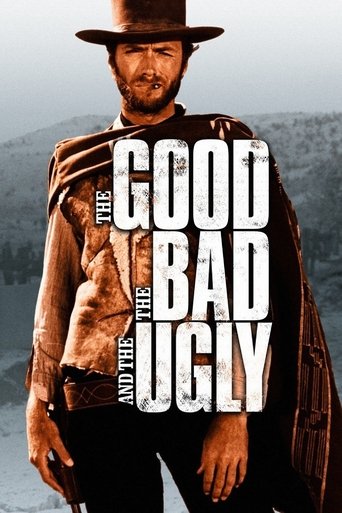
While the Civil War rages on between the Union and the Confederacy, three men – a quiet loner, a ruthless hitman, and a Mexican bandit – comb the American Southwest in search of a strongbox containing $200,000 in stolen gold.

1966

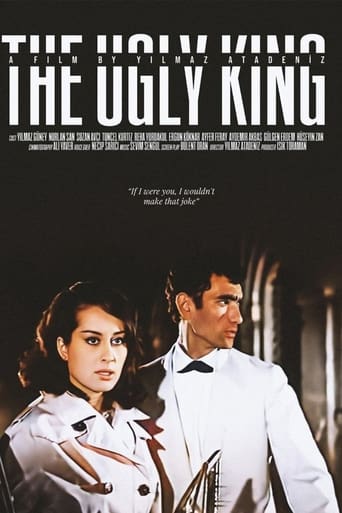
The Ugly King

The Ugly King 1966

1

The story of a detective trying to solve the mafia showdown.

1966

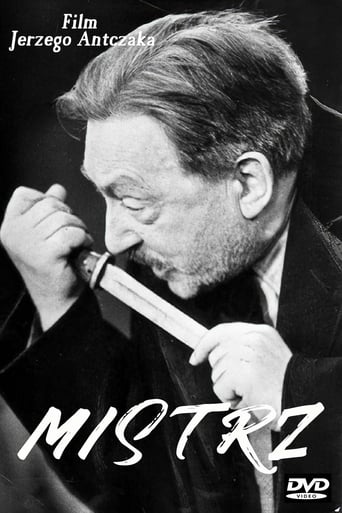
Master

Master 1966

7.70

A young actor preparing for the part of Macbeth recalls his wartime memories connected with his mentor.

1966

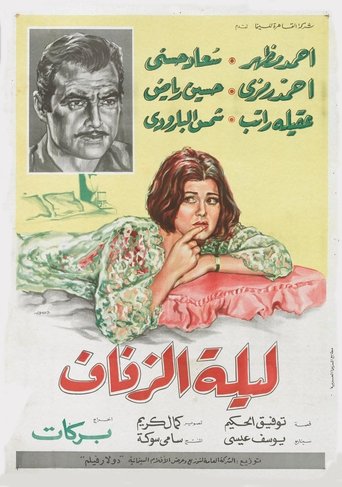
The Wedding Night

The Wedding Night 1966

1

Salwa falls in love with Adel, the carefree young man, but her mother rejects this relationship, preferring him to the serious doctor Magdy, who treats her, and they actually marry to please the mother, but her heart is still attached to Adel.

1966

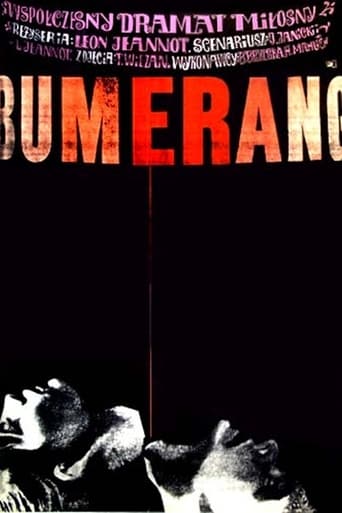
Bumerang

Bumerang 1966

5.00

A German man and a Polish woman fall in love in the days preceding World War II.

1966

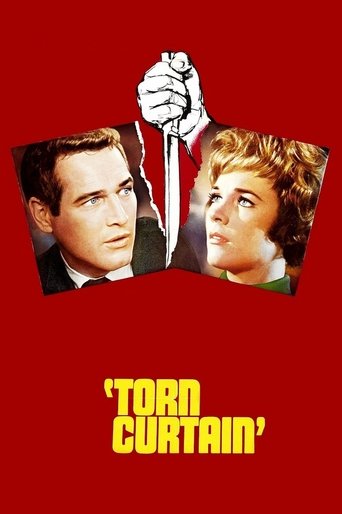
Torn Curtain

Torn Curtain 1966

6.60

During the Cold War, an American scientist appears to defect to East Germany as part of a cloak and dagger mission to find the formula for a resin solution—but the plan goes awry when his fiancee, unaware of his motivation, follows him across the border.

1966

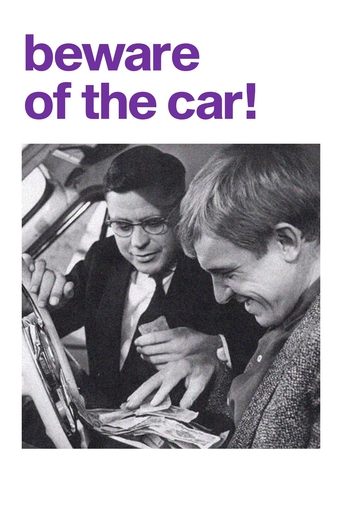
Beware of the Car!

Beware of the Car! 1966

7.55

An insurance agent who moonlights as a car thief steals cars various crooks and never from the common people. He sells the stolen cars and gives the money to charity. His best friend, a cop, is assigned to bring in this modern robin hood.

1966

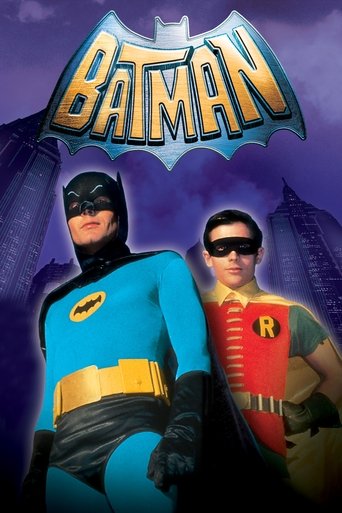
Batman

Batman 1966

6.38

The Dynamic Duo faces four super-villains who plan to hold the world for ransom with the help of a secret invention that instantly dehydrates people.

1966

Parakkum Paavai

Parakkum Paavai 1966

5.30

Story about a spoilt girl and a guy who changes her and saves her from killers.

1966

Belli Moda

Belli Moda 1966

7.00

The movie examines the tumults in the lives of the people residing in the Belli Moda estate. Indira is the heiress of her father's estate, named Belli Moda. A young man, Mohan, is engaged to her and is desirous of owning the Belli Moda, once Indira's father passes away. Mohan returns from the US, only to discover that his fiancee's mother has died in labor, leaving behind a son - the new inheritor of Belli Moda. This shatters Mohan's dreams of the estate and he bitterly refuses to marry Indira. One day, Mohan meets with a car accident and is severely injured. He is nursed by Indira, and presently, Mohan falls truly in love with her and proposes for marriage. However, this time, Indira refuses to marry him and breaks his heart, for he only cared about her money.

1966

Storm Signal

Storm Signal 1966

1

A documentary record of the day-to-day existence of a pair of young married heroin addicts. Preserved by the Academy Film Archive in 2009.

1966

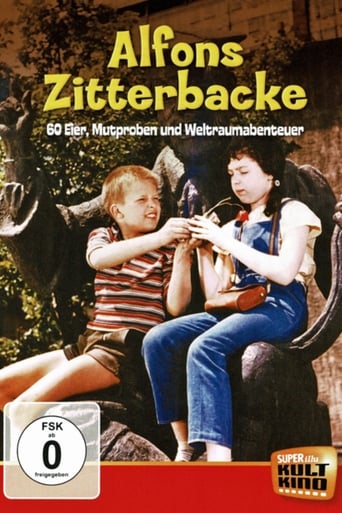
Alfons Zitterbacke

Alfons Zitterbacke 1966

6.10

Alfons is very unlucky boy. Even when he intends well everything is going wrong, so his life is full of various mishaps.

1966

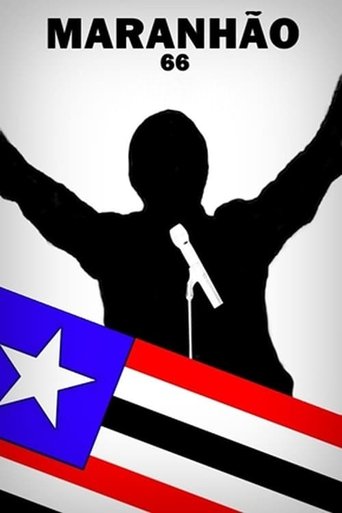
Maranhão 66

Maranhão 66 1966

6.70

A report on Sarney's inauguration as the governor of the Maranhão state. His promises are heard alongside images of the grim reality.

1966

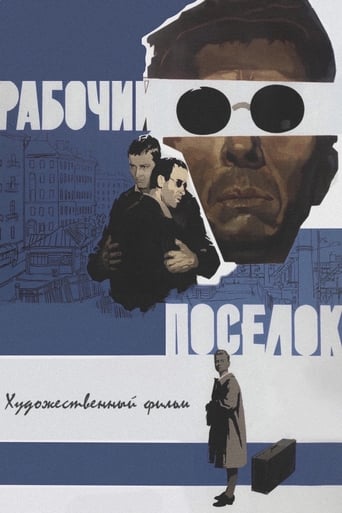
The Worker's Settlement

The Worker's Settlement 1966

2.70

Leonid Pleshcheyev returned from the war blind. Against his will, he became a dependent. He drowns his grief in unrestrained drunkenness, thereby tormenting his wife Mariya and his teenage son Lyonka. Mariya finally decides to take her son and leave for Altai, but the boy runs away and returns to his father. So, together, they eke out a half-miserable existence until Grigoriy Shalagin, Pleshcheyev's longtime friend, returns from the army. It is he who awakens in Leonid the extinct self-esteem and pride of a soldier. Pity aside, he helps him get back to work.

1966

Amazonas, Amazonas

Amazonas, Amazonas 1966

6.50

A brief look at Amazonas, its population, their costumes, the rich nature and its importance to Brazil and the world.

1966

The Opening of the Wells

The Opening of the Wells 1966

7.00

The Opening of the Wells with music by the Czech composer, Bohuslav Martinu was supposed to be part of Laterna Magika II.: Tour programme in 1960. However, it was banned by the communist committee tasked with judging the performance from “a politically correct” point of view. The committee claimed that Radok’s manners and morals were behind the times, and that the director did not show the ultra-modern techniques of Czechoslovakian agriculture. The premiere was postponed and Radok was fired from the Laterna Magika Theatre. His young colleagues (including Milos Forman) were officially asked to finish the rehearsals without the controversial part, and to make other minor changes in other scenes (these changes were made). Alfred Radok considered this to an unforgivable betrayal, as he expected them to leave the theatre to support him.

1966

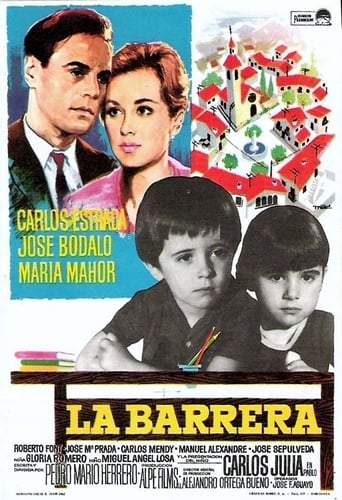
La barrera

La barrera 1966

1

In a small town, the administrator, confronted with the baker, forbids his children fto talk with those of the baker, and vice versa. One day, Paco and Pablo, the baker's children, listen to two builders who plan to kidnap Mary, the daughter of the administrator. Children decide to keep the secret and save the girl themselves. Meanwhile, a young teacher arrives to the village with his wife and kids get back to school. But the administrator's wife is furious because it is not her brother the one who gets the job and, along with her husband, will try to convince everyone to get rid of the teacher.

1966

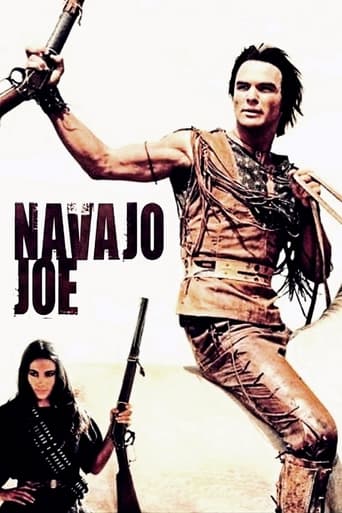
Navajo Joe

Navajo Joe 1966

6.20

The sole survivor of a bloody massacre vows revenge on his attackers and on the men who killed his wife.

1966

Fahrenheit 451

Fahrenheit 451 1966

7.11

In the future, the government maintains control of public opinion by outlawing literature and maintaining a group of enforcers, known as “firemen,” to perform the necessary book burnings. Fireman Montag begins to question the morality of his vocation…

1966

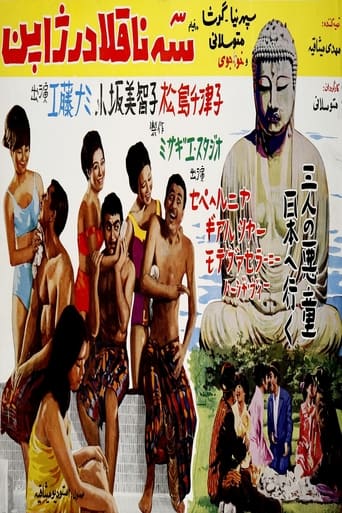
Se Naghola dar Japon

Se Naghola dar Japon 1966

1

An international smuggler dressed as an Arab sheikh hires three unemployed young men named Masoud, Nader and Amir and takes them to Japan to bring the diamonds stolen from a temple to Iran.

1966

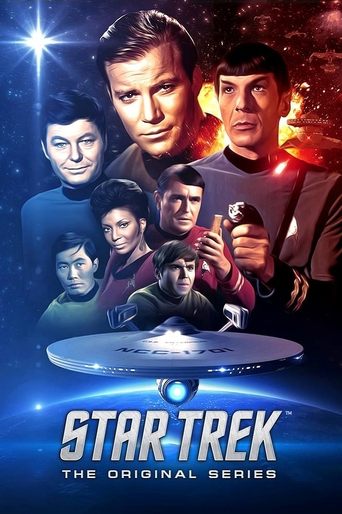
Star Trek

Star Trek 1966

8.01

Space. The Final Frontier. The U.S.S. Enterprise embarks on a five year mission to explore the galaxy. The Enterprise is under the command of Captain James T. Kirk with First Officer Mr. Spock, from the planet Vulcan. With a determined crew, the Enterprise encounters Klingons, Romulans, time paradoxes, tribbles and genetic supermen led by Khan Noonian Singh. Their mission is to explore strange new worlds, to seek new life and new civilizations, and to boldly go where no man has gone before.

1966

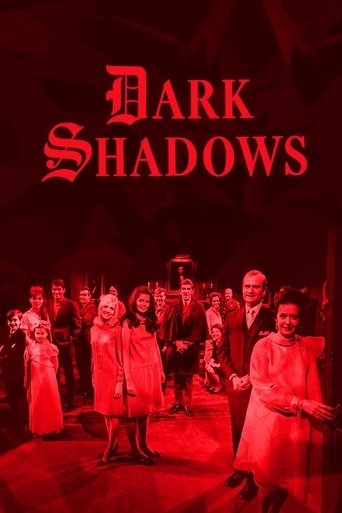
Dark Shadows

Dark Shadows 1966

7.24

Dark Shadows is an American gothic soap opera that originally aired weekdays on the ABC television network, from June 27, 1966, to April 2, 1971. The show was created by Dan Curtis. The story bible, which was written by Art Wallace, does not mention any supernatural elements. It was unprecedented in daytime television when ghosts were introduced about six months after it began. The series became hugely popular when vampire Barnabas Collins appeared a year into its run. Dark Shadows also featured werewolves, zombies, man-made monsters, witches, warlocks, time travel, and a parallel universe. A small company of actors each played many roles; indeed, as actors came and went, some characters were played by more than one actor. Major writers besides Art Wallace included Malcolm Marmorstein, Sam Hall, Gordon Russell, and Violet Welles.
1966

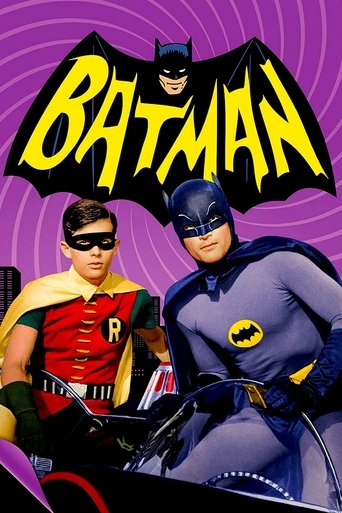
Batman

Batman 1966

7.29

Wealthy entrepreneur Bruce Wayne and his ward Dick Grayson lead a double life: they are actually crime fighting duo Batman and Robin. A secret Batpole in the Wayne mansion leads to the Batcave, where Police Commissioner Gordon often calls with the latest emergency threatening Gotham City. Racing to the scene of the crime in the Batmobile, Batman and Robin must (with the help of their trusty Bat-utility-belt) thwart the efforts of a variety of master criminals, including The Riddler, The Joker, Catwoman, and The Penguin.

1966

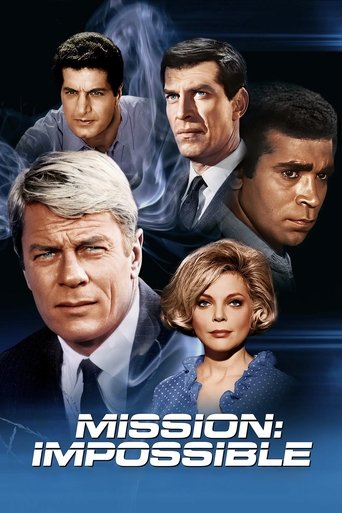
Mission: Impossible

Mission: Impossible 1966

7.56

Mission: Impossible is an American television series that was created and initially produced by Bruce Geller. It chronicles the missions of a team of secret government agents known as the Impossible Missions Force. In the first season, the team is led by Dan Briggs, played by Steven Hill; Jim Phelps, played by Peter Graves, takes charge for the remaining seasons. A hallmark of the series shows Briggs or Phelps receiving his instructions on a recording that then self-destructs, followed by the theme music composed by Lalo Schifrin. The series aired on the CBS network from September 1966 to March 1973, then returned to television for two seasons on ABC, from 1988 to 1990, retaining only Graves in the cast. It later inspired a popular series of theatrical motion pictures starring Tom Cruise, beginning in 1996.

1966

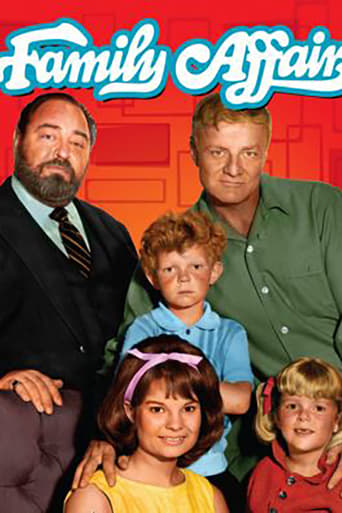
Family Affair

Family Affair 1966

6.65

Family Affair is an American sitcom that aired on CBS from September 12, 1966 to September 9, 1971. The series explored the trials of well-to-do civil engineer and bachelor Bill Davis as he attempted to raise his brother's orphaned children in his luxury New York City apartment. Davis' traditional English gentleman's gentleman, Mr. Giles French, also had adjustments to make as he became saddled with the responsibility of caring for 15-year-old Cissy and the 6-year-old twins, Jody and Buffy. The show ran for 138 episodes. Family Affair was created and produced by Don Fedderson, also known for My Three Sons and The Millionaire.
1966

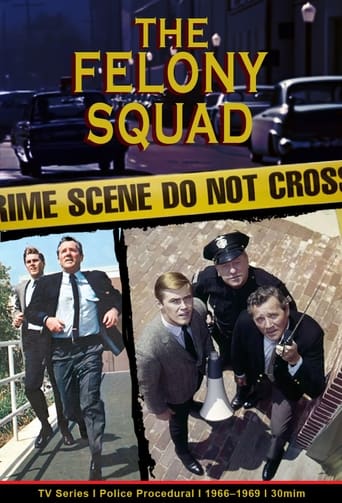
Felony Squad

Felony Squad 1966

6.40

Twenty-year veteran Detective Sergeant Sam Stone is paired with rookie Briggs in a large Western metropolis.

1966

That Girl

That Girl 1966

6.13

That Girl is an American sitcom that ran on ABC from 1966 to 1971. It stars Marlo Thomas as the title character Ann Marie, an aspiring actress, who moves from her hometown of Brewster, New York to try to make it big in New York City. Ann has to take a number of offbeat "temp" jobs to support herself in between her various auditions and bit parts. Ted Bessell played her boyfriend Donald Hollinger, a writer for Newsview Magazine; Lew Parker and Rosemary DeCamp played Lew Marie and Helen Marie, her concerned parents. Bernie Kopell, Ruth Buzzi and Reva Rose played Ann and Donald's friends. That Girl was developed by writers Bill Persky and Sam Denoff, who had served as head writers on The Dick Van Dyke Show earlier in the 1960s.

1966

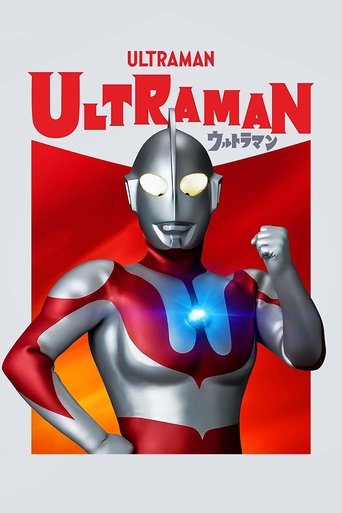
Ultraman

Ultraman 1966

8.40

Hayata is a member of the Science Patrol, an organization tasked with investigating bizarre anomalies. He is mortally wounded when accidently encountering an alien being from Land of Light, who grants Hayata new life as the two are merged into one. Now, whenever a threat arises that is too great for the Science Patrol to handle, Hayata activates the beta capsule and becomes the hero known as Ultraman.

1966

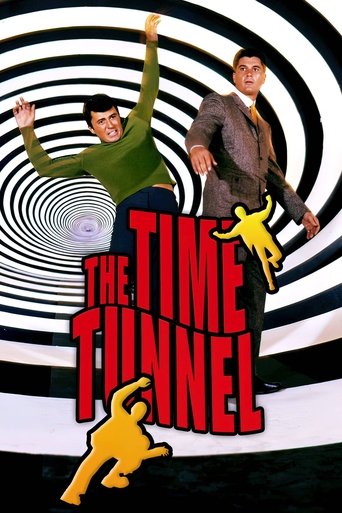
The Time Tunnel

The Time Tunnel 1966

7.60

The Time Tunnel is a 1966–1967 U.S. color science fiction TV series, written around a theme of time travel adventure. The show was creator-producer Irwin Allen's third science fiction television series, released by 20th Century Fox and broadcast on ABC. The show ran for one season of 30 episodes. Reruns are viewable on cable and by internet streaming. A pilot for a new series was produced in 2002, although it was not picked up.

1966

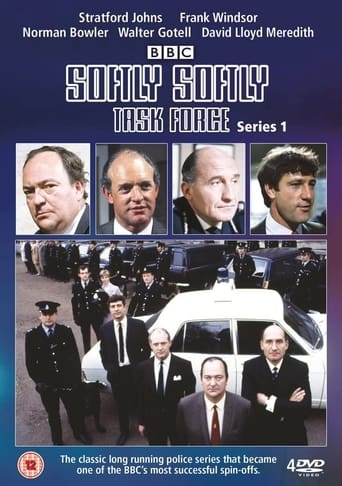
Softly, Softly

Softly, Softly 1966

5.00

Softly, Softly is a British television drama series, produced by the BBC and screened on BBC 1 from January 1966. It centred around the work of regional crime squads, plain-clothes CID officers based in the fictional region of Wyvern, supposedly in the Bristol area of England.

1966

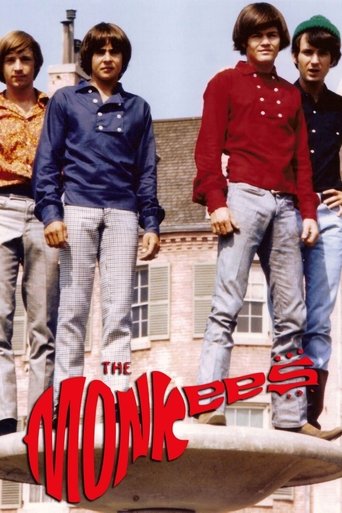
The Monkees

The Monkees 1966

6.50

Micky, Mike, Peter, and Davy are four young men in mid-1960s LA, members of a struggling country-folk-rock band looking for their big break amid madcap encounters with a variety of people straight out of TV and movie central casting, with full knowledge that their existence is part of a weekly television series.

1966

The Green Hornet

The Green Hornet 1966

7.16

The Green Hornet is a television series on the ABC US television network that aired for the 1966–1967 TV season starring Van Williams as the Green Hornet/Britt Reid and Bruce Lee as Kato.

1966

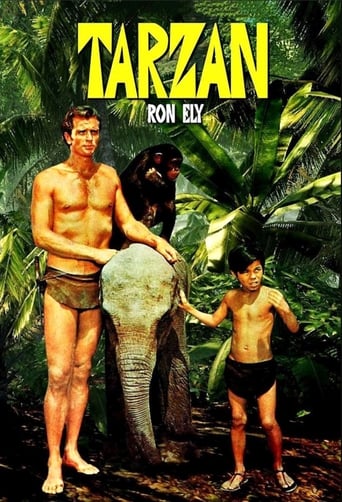
Tarzan

Tarzan 1966

6.70

Tarzan is a series that aired on NBC from 1966 – 1968. The series portrayed Tarzan as a well-educated character, one who, tired of civilization, had returned to the jungle where he had been raised. The show retained many of the trappings of the classic movie series, including Cheeta, while excluding other elements, such as Jane, as part of the "new look" for the fabled apeman that producer Sy Weintraub had introduced in previous motion pictures starring Gordon Scott, Jock Mahoney, and Mike Henry. CBS aired repeat episodes the program during the summer of 1969.

1966

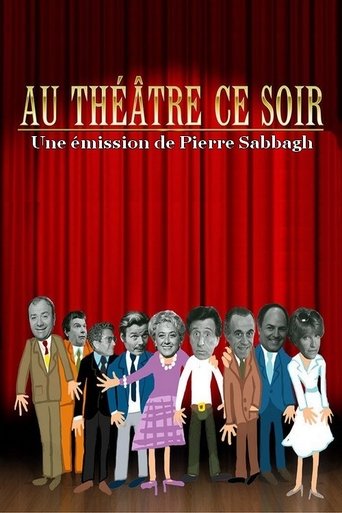
At Theatre Tonight

At Theatre Tonight 1966

6.70

At Theater tonight is a TV show broadcasted from 25th August 1966 to 21st September 1985. The show is broadcast plays recorded in two or three days, during public performances at the Théâtre Marigny on the Champs-Élysées, or sometimes Edouard VII theater.

1966

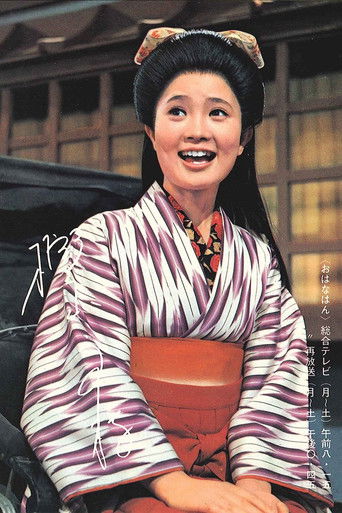
Ohanahan

Ohanahan 1966

1

The 6th NHK Asadora. Starring Fumie Kashiyama as a woman, born in the Meiji era, who raises a family by herself.

1966

The Rat Patrol

The Rat Patrol 1966

7.20

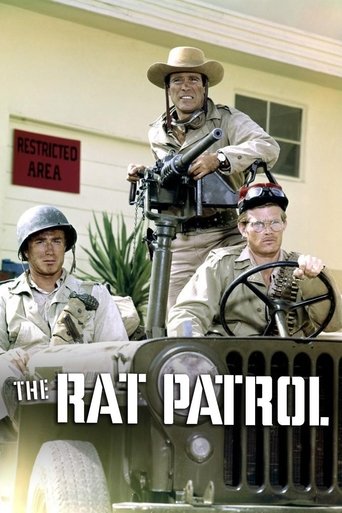
The exploits of four Allied soldiers — three Americans and one Englishman — who are part of a long-range desert patrol group in the North African campaign during World War II. Their mission: "to attack, harass and wreak havoc on Field Marshal Rommel's vaunted Afrika Korps".

1966

Hollywood Squares

Hollywood Squares 1966

7.80

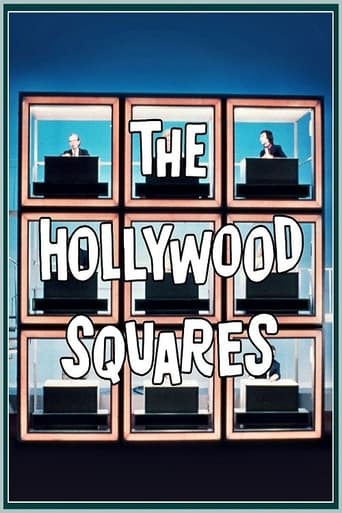
Hollywood Squares is an American panel game show, in which two contestants play tic-tac-toe to win cash and prizes. The "board" for the game is a 3 × 3 vertical stack of open-faced cubes, each occupied by a celebrity seated at a desk and facing the contestants. The stars are asked questions by the host, or "Square-Master", and the contestants judge the veracity of their answers in order to win the game. Although Hollywood Squares was a legitimate game show, the game largely acted as the background for the show's comedy in the form of joke answers, often given by the stars prior to their "real" answer. The show's writers usually supplied the jokes. In addition, the stars were given question subjects and plausible incorrect answers prior to the show. The show was scripted in this sense, but the gameplay was not. In any case, as host Peter Marshall, the best-known "Square-Master" and the man in whose honor the show's first announcer, Kenny Williams, actually "coined" the term, would explain at the beginning of the Secret Square game, the celebrities were briefed prior to show to help them with bluff answers, but they otherwise heard the actual questions for the first time as they were asked on air.

1966

Till Death Us Do Part

Till Death Us Do Part 1966

7.37

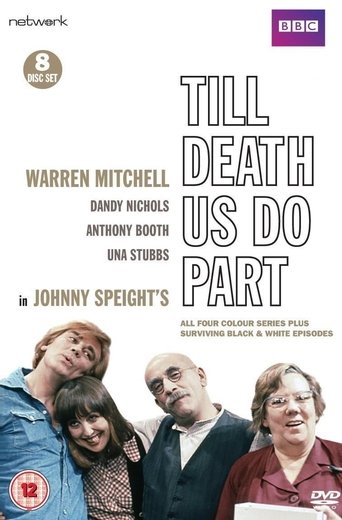
This English follows the East End working-class Garnett family, headed by patriarch Alf, a reactionary working-class man who wields racist and anti-Socialist views. His long-suffering wife Else manages to keep things in control... for the most part. Their progressive daughter Rita lives with them, as does her Irish husband Mike, who, with an array of liberal worldviews, often quarrels with his father-in-law. It inspired the American show "All In The Family" and several other international variations on the same theme.

1966

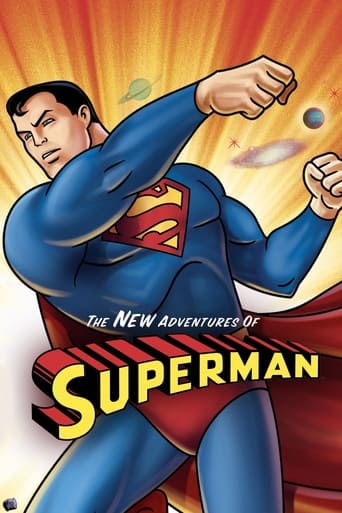
The New Adventures of Superman

The New Adventures of Superman 1966

5.96

The New Adventures of Superman is a series of six-minute animated Superman adventures produced by Filmation that were broadcast on CBS between 1966 and 1970. The 68 segments appeared as part of three different programs during that time, packaged with similar shorts featuring The Adventures of Superboy and other DC Comics superheroes.

1966